
Why United Airlines is Putting the Map at the Center of its Starlink Era
A fireside chat with Sameer Shaikh, Senior Manager - Inflight Entertainment at United Airlines
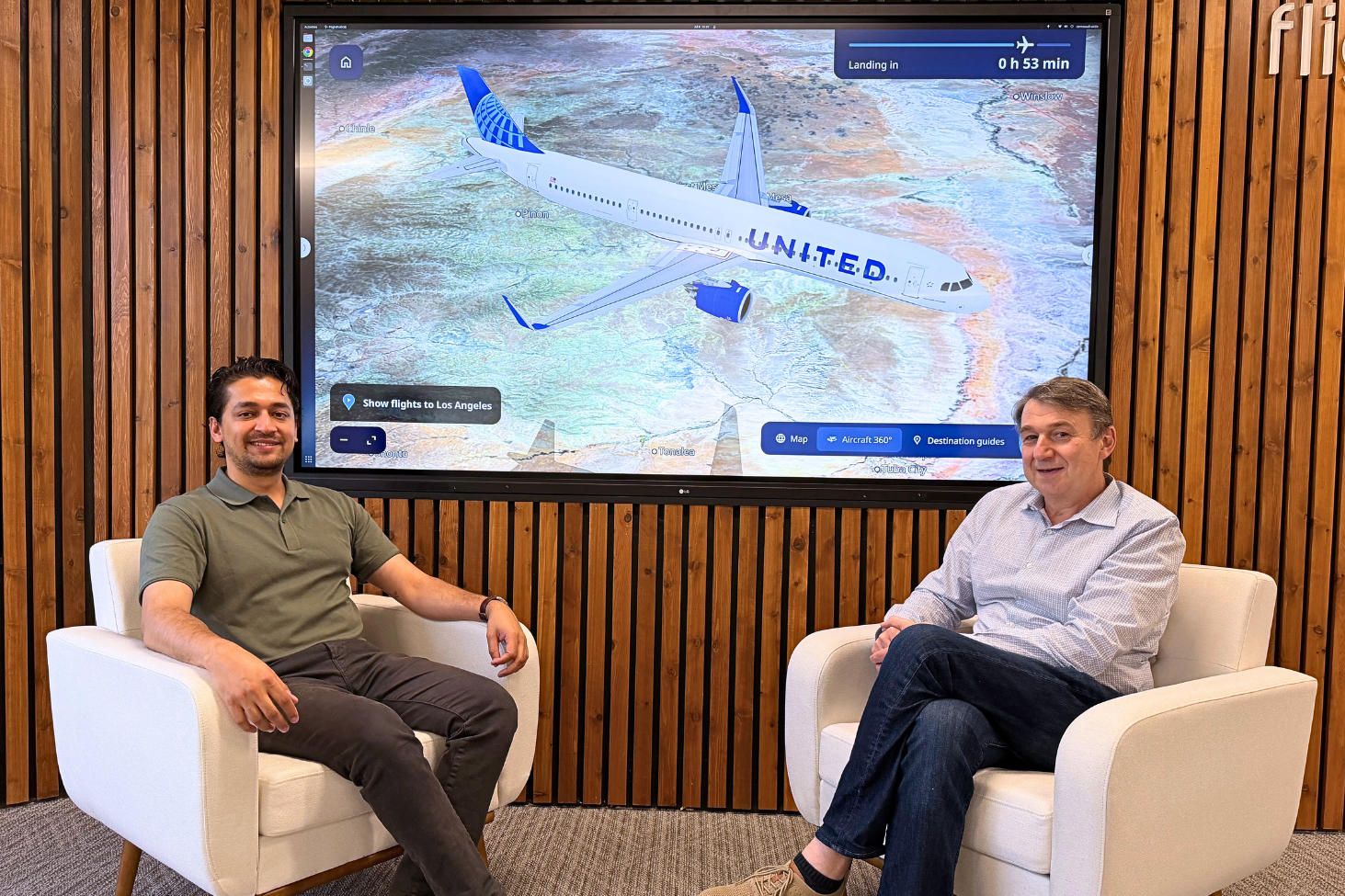
Sameer Shaikh and Boris Veksler at FlightPath3D headquarters in Irvine, California.
When United Airlines announced it was rolling out Starlink across its entire fleet, the aviation world focused heavily on the hardware. But for United, ultra-fast Wi-Fi was never the end goal; it was simply the foundation for a completely reimagined, connected passenger journey.
In this exclusive Q&A, Sameer, Senior Manager of Inflight Entertainment at United Airlines, sits down with FlightPath3D CEO, Boris Veksler, to discuss how they’re using the map to build an omnichannel experience that is the ultimate game-changer for passenger loyalty.
Boris: What role does the map play in the inflight experience?
Sameer: It's one of the top things we want to keep on board, and it's genuinely unique. We're an engagement and entertainment channel unlike any of them, and the map sits right at the center of it. Even as we've brought Starlink onto our mainline fleet, our Seatback/Map engagement hasn't dropped. Customers stay connected to friends and social, and they still come back to the map.
Speaking of Starlink, you're rolling it out across the fleet. Why does the map matter on top of the pipe?
We saw the inflection point well before COVID. Consumer expectations were shifting, and we knew the older connectivity couldn't sustain what was coming. But Starlink was never just about a faster pipe, it was about a connected journey. From a customer's home, to the aircraft, and back. That's a reframing of our brand: United isn't only getting you safely from A to B, we're connecting you to the world. The map is what turns the pipe into an experience.
Why offer a cloud map when the seatback is already so strong?
The seatback is a phenomenal lean-back channel, almost a merchandising engine right in front of you. But the hardware moves slower than the cloud. The cloud map lets us bring rich destination video content to every screen and connect the seatback and the phone into one experience. Seatback is where you lean back and watch; the phone is where you swipe, save, and take it with you.
How big of a priority is getting the seatback and the phone to feel like one experience?
A thousand percent, that's what we're focused on right now. People underestimate what omni-channel actually takes. Every time we add destinations or update routes, every time there's a geopolitical change we have to reflect, every piece of advertising and content, all of it has to be consistent across every screen: seatback, mobile, web. Eventually the crew becomes part of that same experience too. A lot of airlines have gotten this wrong, us included. Getting it right is the whole game.
What did you look for in a cloud map partner?
We needed a specialist, not a generalist. The geopolitical depth mattered enormously — borders, place names, disputed territories — and we needed a partner plugged into all of that. Most providers are stuck thinking "this is your hardware, here's your flight tracker, off you go," without the routes and destination content that make the map worth engaging with in the first place. We needed someone ten steps ahead, not five.
How are you approaching destination discovery on board?
We invest heavily in content, and short-form was our gap. The newer generation discovers everything through video, and the cabin is the perfect moment because the customer is already in discovery mode. Things like Reels and our 3 Perfect Days videos give someone the visual cue of what they can do in Chicago, and they associate it with United. That builds a rhythm, every time they fly United.
Where does Luci, the AI companion, fit?
That's the next thing we really want to focus on. Luci turns passive map-watching into something gently active. It works for the customer who just wants to know what they're flying over, the one stressing because they haven't made a plan yet, and the one getting bored on a twelve-hour flight. For example, “You're flying to Tokyo, want to view some places to visit or eat?" It's how we personalize the experience for different passengers.
How do you think about the return on investment for the cloud map?
The cloud map filled a real gap. The map used to be purely operational, but it's one of the only moments where the passenger genuinely wants to be looking at it, and on the regional fleet that engagement window was missing entirely. All of our executives are fully committed to the journey experience and the map tells you where you are, where you're going, and what you can do, and mobile requires a different but consistent experience. The data is just as valuable: we can see which destinations and routes customers explore, and when, and tie it back to the passenger profile, so we can gently nudge them later. The commercial upside follows from there with Google Ad Manager surfacing relevant ads and passengers booking tours and attractions right in the experience.
There's a lot of work that happens with the flight data that most people never see. What does it take to get it right?
First, this is super important, and a lot harder than it looks. We're aggregating flight data, baggage data, schedules, gates, connections, pulling it all together from different systems in real time. Sometimes that data comes in delayed, or with elements missing, and when it does, that reflects on United. Customers are already anxious, and if the data doesn't sync across screens, that anxiety lands on us — you miss your cab, your ride shows up at the wrong time, and you associate it with United. We have to get that right.
Why FlightPath3D?
It comes down to trust. I don't have to hold your hand. I know you're thinking ten steps ahead, and most of the time you're already there. There's reliability, especially when geopolitical issues come up. And you ship: Control Tower went from idea to on-wing in around nine months. When we first talked to the data providers, they told us straight up they're a data company. They have the data, but bringing it to life on board is a different thing entirely. That's where FlightPath3D came in. You guys get stuff done.
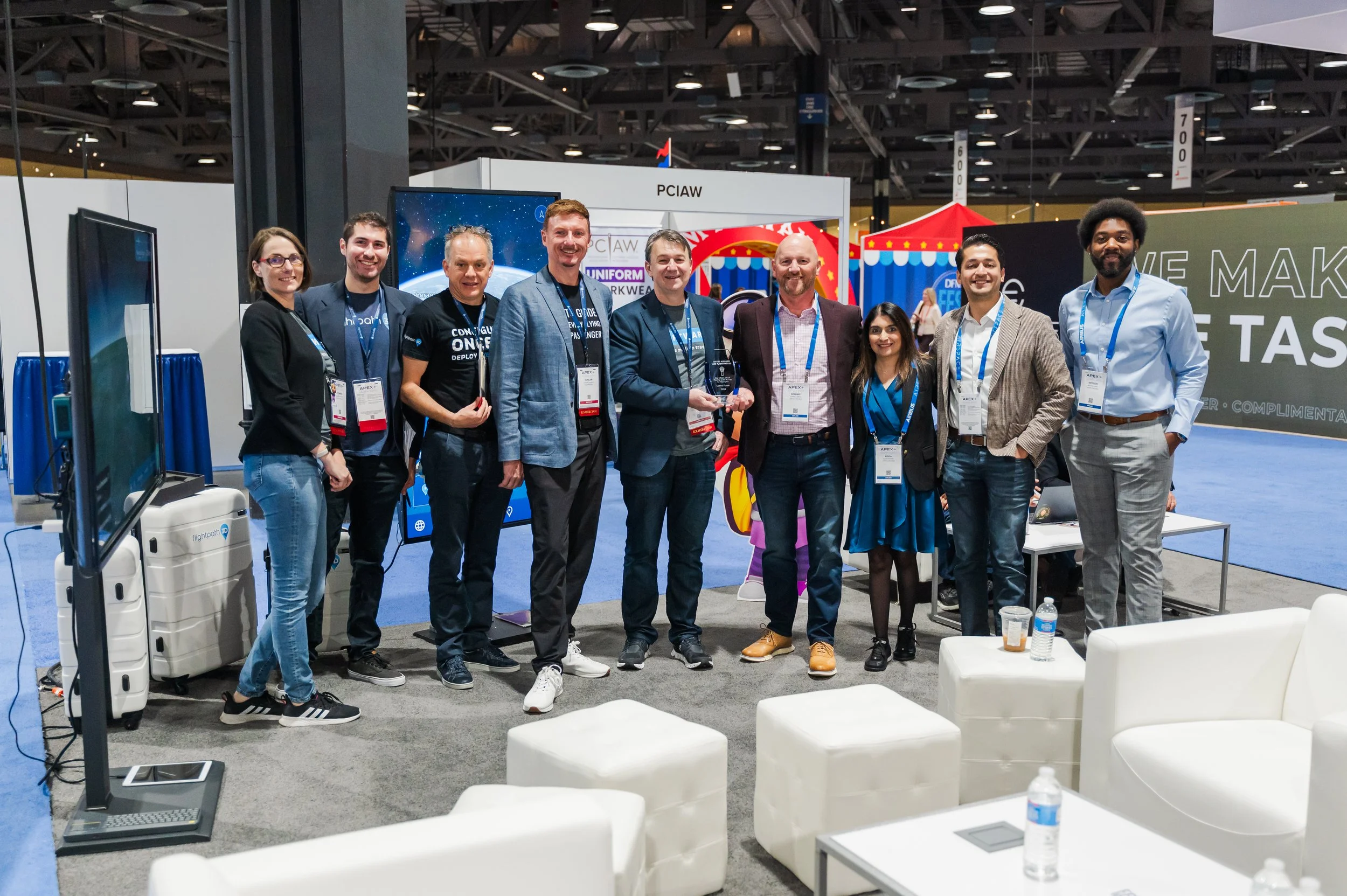
United Airlines and FlightPath3D celebrating the launch of Control Tower at APEX 2024.
We’ve done a lot together in a short amount of time, where does this go from here?
Oh we have so many ideas. Without giving too much away, I want the map to become your go-to place for what to do, what to watch, and what's waiting at every destination. Ultimately build an experience that's so unique that once you get off the plane, you're like, “I'm glad I spent a lot of time in the map.” Get it right and the map becomes the smart journey companion that makes United the airline you come back to.